How AI Automation For B2B simplifies supply chain management
The Future of B2B: Harnessing AI Automation to Drive Success
The landscape of B2B is changing as companies significantly turn to AI automation for strategic advantage. This makeover assures to improve effectiveness and consumer interaction with innovative technologies. The integration of these tools is not without its challenges. Understanding exactly how companies can navigate this advancing terrain will certainly be vital for future success. What elements will establish the performance of AI in this field? The answers may redefine conventional company designs.
Recognizing AI Automation in B2B
As organizations progressively look for efficiency, recognizing AI automation in B2B ends up being crucial. Growth Systems For B2B. AI automation refers to making use of expert system technologies to improve and boost service processes. In the B2B market, this involves the integration of AI devices to manage tasks such as data analysis, client communications, and supply chain procedures. By leveraging artificial intelligence and natural language handling, business can enhance precision, minimize human mistake, and speed up decision-making. AI automation facilitates the handling of large quantities of data, allowing services to extract beneficial understandings and optimize their procedures. As companies browse this technical landscape, a detailed grip of AI automation's abilities will certainly empower them to stay competitive and responsive to market demands
Secret Benefits of AI Automation for Companies
While several businesses face boosting functional demands, AI automation provides countless benefits that can markedly improve their performance. One significant benefit is efficiency; AI systems can do repeated jobs faster and with better accuracy than human beings, thereby releasing and reducing mistakes up employees for more strategic campaigns. Furthermore, AI automation enables data-driven decision-making by evaluating vast datasets swiftly, offering insights that educate business methods. Expense reduction is one more vital benefit, as automation lessens labor expenses and optimizes source allotment. AI can boost scalability, permitting services to adjust to market modifications promptly. Ultimately, the combination of AI automation promotes advancement, allowing firms to remain competitive in a quickly evolving landscape.
Transforming Client Experiences With AI
AI is reshaping client experiences by enhancing and enabling tailored communications interaction. With the implementation of anticipating analytics, services can prepare for consumer requirements and choices, bring about extra tailored services. Furthermore, enhancing assistance procedures with AI modern technology enhances effectiveness and fulfillment, eventually changing the overall consumer trip.
Customized Interactions and Involvement

Anticipating Analytics Implementation
As organizations increasingly seek to improve client experiences, applying anticipating analytics has actually emerged as a critical strategy in the B2B sector. By leveraging data-driven understandings, companies can prepare for customer requirements and choices, enabling them to tailor their offerings extra effectively. Anticipating analytics makes use of historical data and advanced formulas to forecast future behaviors, allowing services to determine prospective challenges and chances. This proactive approach not just boosts client satisfaction but also promotes commitment by supplying timely and pertinent options. In addition, anticipating analytics helps in source allotment, ensuring that advertising efforts are focused on high-value prospects. Eventually, the integration of anticipating analytics outfits B2B firms with the tools essential to transform consumer interactions and drive lasting success in a progressively competitive landscape.
Streamlining Support Procedures
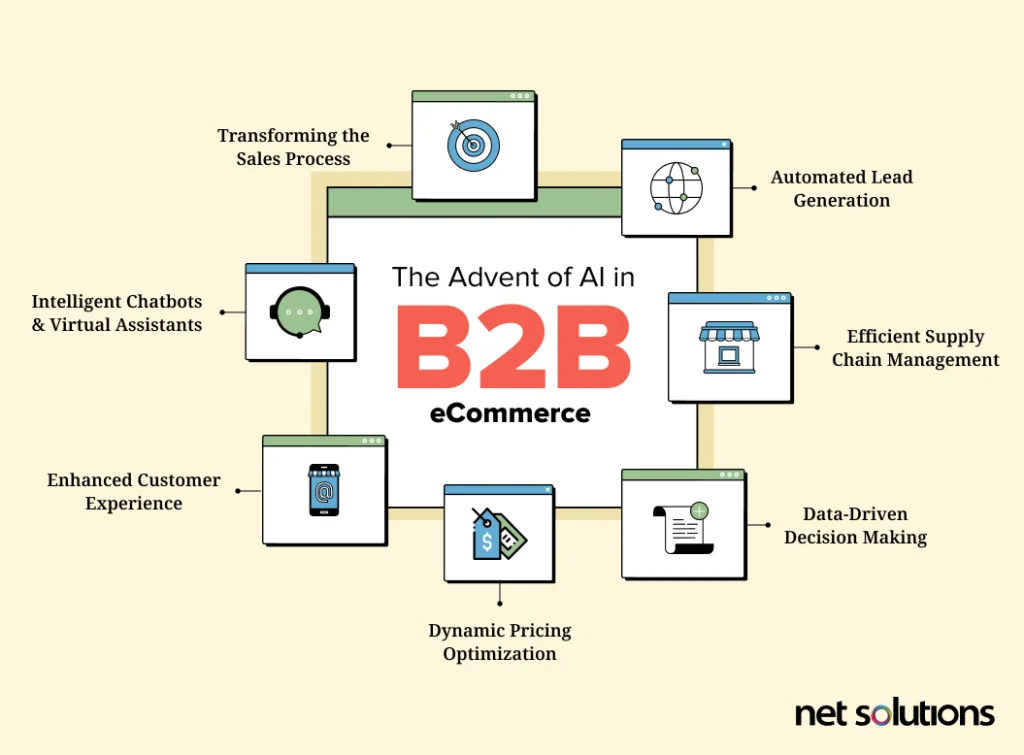
Enhancing consumer experiences in the B2B sector extends beyond anticipating analytics; streamlining support processes plays a crucial role. By integrating AI-driven remedies, organizations can boost and automate routine questions reaction times, causing heightened consumer complete satisfaction. Chatbots and virtual aides give 24/7 assistance, attending to client needs promptly and reducing the problem on human representatives. This automation permits teams to concentrate on intricate concerns, promoting more purposeful communications. AI tools can examine support information to identify fads and locations for improvement, making certain constant improvement of solution quality. As companies embrace these modern technologies, they position themselves as responsive and customer-centric, inevitably driving loyalty and service development in a progressively competitive landscape
Streamlining Workflow and Processes
Improving procedures and procedures in B2B atmospheres is essential for boosting general effectiveness. By maximizing operations effectiveness and automating regular jobs, organizations can reduce hand-operated mistakes and maximize important sources. This change not just boosts performance however likewise makes it possible for teams to concentrate on tactical initiatives that drive growth.
Optimizing Process Effectiveness
Maximizing process efficiency is vital for businesses seeking to improve and reduce functional costs productivity. By examining existing procedures, companies can identify bottlenecks and redundancies that impede performance. Implementing structured procedures improves communication and partnership amongst groups, making sure that tasks are finished a lot more swiftly. Using data-driven insights enables business to make educated decisions that improve procedures better. Additionally, taking on integrated modern technologies can promote seamless information circulation, decreasing the threat of errors and delays. As organizations embrace these changes, they not only promote an extra active job setting but additionally place themselves to respond swiftly to market demands. Eventually, concentrating on workflow effectiveness allows companies to assign resources successfully, driving long-lasting success in a significantly affordable landscape.
Automating Regular Tasks
Numerous companies are progressively transforming to automation to deal with regular jobs, recognizing its prospective to greatly improve functional performance. By releasing AI-driven options, companies can simplify repetitive activities such as data access, billing handling, and consumer inquiries. This change not just decreases human error but additionally frees up important staff member next page time, permitting staff to concentrate on critical initiatives and value-added tasks. Additionally, automation can boost reaction times and solution uniformity, bring about improved customer contentment. As organizations navigate an affordable landscape, leveraging automation for routine tasks comes to be necessary for preserving and maximizing workflows dexterity. Inevitably, this approach promotes advancement and drives growth, placing organizations for lasting success in the developing B2B environment.
Enhancing Decision-Making With Data Insights
As organizations browse a significantly complicated landscape, leveraging data understandings ends up being vital for notified decision-making. Minarik AI. By making use of ai-driven tools and advanced analytics, organizations can change raw data right into actionable intelligence. This allows them to recognize fads, forecast market modifications, and optimize strategies based on real-time info. Improved decision-making processes count on data visualization methods, permitting stakeholders to conveniently make and interpret complex datasets swift, evidence-based choices. In addition, insights obtained from consumer behavior and market dynamics encourage business to customize their offerings, enhancing consumer satisfaction and driving development. Eventually, harnessing data insights not just boosts decision-making effectiveness however additionally positions businesses to continue to be affordable in a quickly advancing industry
Conquering Obstacles in AI Implementation
AI application holds the pledge of significant functional renovations, organizations typically deal with a myriad of obstacles that can prevent development. Secret barriers include data top quality concerns, as several business have problem with inconsistent or incomplete datasets required for reliable AI training. In addition, resistance to change within the labor force can hinder the adoption of AI innovations, as employees may fear job variation or do not have the required skills. Budget restrictions additionally offer a challenge, limiting investment in the needed framework and talent. In addition, integrating AI systems with existing processes can be complex, demanding significant time and resources. Overcoming these difficulties requires a critical technique that consists of extensive training, change administration, and a commitment to continuous renovation in AI initiatives
Future Patterns: The Following Frontier in B2B Automation
While the landscape of B2B automation remains to develop, arising trends are poised to redefine exactly how organizations operate. The integration of innovative man-made knowledge will facilitate more individualized consumer experiences, enabling companies to tailor solutions exactly to client demands. The surge of predictive analytics will certainly allow companies to prepare for market shifts and enhance decision-making procedures. Automation of routine tasks through robot procedure automation (RPA) will improve effectiveness, lowering functional costs substantially. Additionally, the adoption of blockchain innovation assures enhanced transparency and security in deals. As these developments gain traction, business will increasingly leverage AI-driven understandings to foster cooperation, simplify supply chains, and improve total productivity, marking a transformative change in the B2B landscape.
Regularly Asked Questions
What Sorts Of Businesses Can Profit Many From AI Automation?
Just How Can Small Companies Execute AI Automation Effectively?
Little organizations can apply AI automation effectively by identifying repeated tasks, choosing easy to use tools, making sure adequate training for employees, and gradually integrating remedies to maximize workflows while keeping an eye on efficiency and adjusting techniques based on responses.
What Prevail False Impressions Concerning AI in B2B?
Common false impressions concerning AI in B2B include the idea that it is only for big business, that it ensures instantaneous outcomes, and that it can totally replace human decision-making instead of boosting it.
How Does AI Automation Effect Staff Member Responsibilities and Job Security?
AI automation improves employee roles by streamlining recurring jobs, fostering efficiency and innovation. While some anxiety task loss, it typically develops opportunities for upskilling and brand-new settings, ultimately enhancing task security via included value and performance.
What Abilities Are Required to Take Care Of AI Automation Projects?
To handle AI automation jobs, people require strong logical abilities, task administration experience, effectiveness in data analysis, understanding of device understanding ideas, reliable interaction capabilities, and flexibility to rapidly transforming technological environments. These skills assure successful execution.
As businesses increasingly look for effectiveness, understanding AI automation in B2B comes to be crucial. AI automation assists in the handling of large quantities of data, allowing services to extract valuable insights and enhance their procedures. While many services grapple with enhancing operational demands, AI automation provides various advantages that can markedly enhance their efficiency. Automation of routine tasks via robotic process automation (RPA) will improve performance, reducing operational costs substantially - Business Process Automation. Manufacturing, logistics, and customer service organizations can benefit most from AI automation